Digifest is always a little bit of a whirlwind.
A couple of days surrounded by people who care deeply about education, technology and what the future of the sector might look like. Conversations between sessions, ideas scribbled on sticky notes, coffee-fuelled debates about artificial intelligence, infrastructure, pedagogy and everything in between.
This year I attended and supported a mixture of sessions, conversations and community meet-ups. Here are a few of the highlights that stood out to me.
What is digital transformation for?
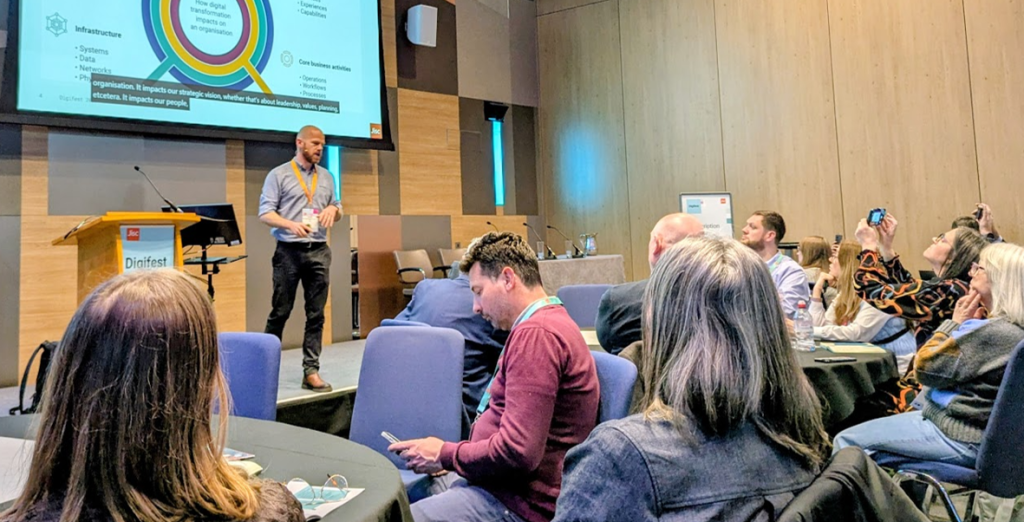
One of the sessions I joined was facilitated by Dan Hughes, Paul McKean and Paola Marchionni, where participants were invited to explore a deceptively simple question about the purpose behind digital change in education.
Rather than focusing on tools or systems, the conversation invited participants to explore the purpose behind digital change in education and what institutions hope to achieve through digital transformation. Around the room, people shared different perspectives, ranging from improving the learner experience to strengthening institutional resilience, and preparing students for a digital world.
Dan closed the session by reflecting on a quote from Antony Moss, who frames digital as a whole-organisation issue rather than something owned by a single team or department. The session was a useful reminder that the real challenge in many organisations isn’t introducing new technology, it’s embedding change across the institution.
Beyond the Technology podcast
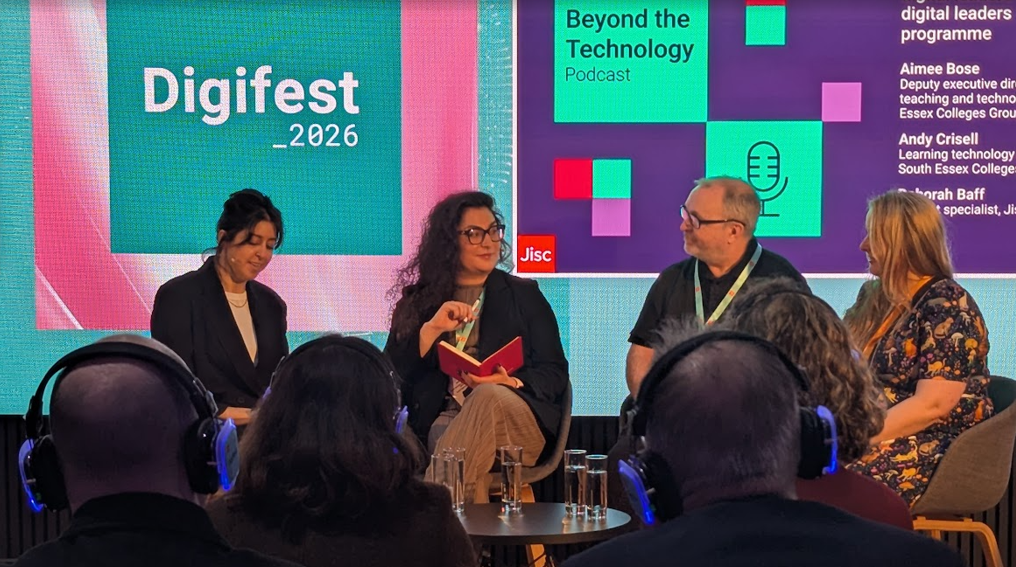
I really enjoyed listening to Aimee Bose and Andy Crissell as they shared their experiences of taking part in the Jisc Digital Leaders Programme.
The conversation explored how the programme supports people from different roles across organisations to think about digital leadership and organisational change. They also reflected on how the sessions enabled participants to learn from each other and share experiences from their own institutions.
It was also great to see my colleague Debbie Baff who leads the programme, explain the changes made to the programme to make it even more relevant and accessible through the Reflect and Apply modules.
Podcast conversation on communities and Digital 2030
I had the opportunity to host a short podcast conversation with Tibi Dancovici and Richard Fullylove from Coleg y Cymoedd, where we talked about their involvement in leading Jisc communities in Wales.
During the discussion, they reflected on the progress made since the launch of the Digital 2030 strategic framework for Wales, and how communities of practice have played an important role in bringing practitioners together to share ideas and experiences. This episode will be released in April as part of the Community Stories podcast series.
Cymru Connected meet-up
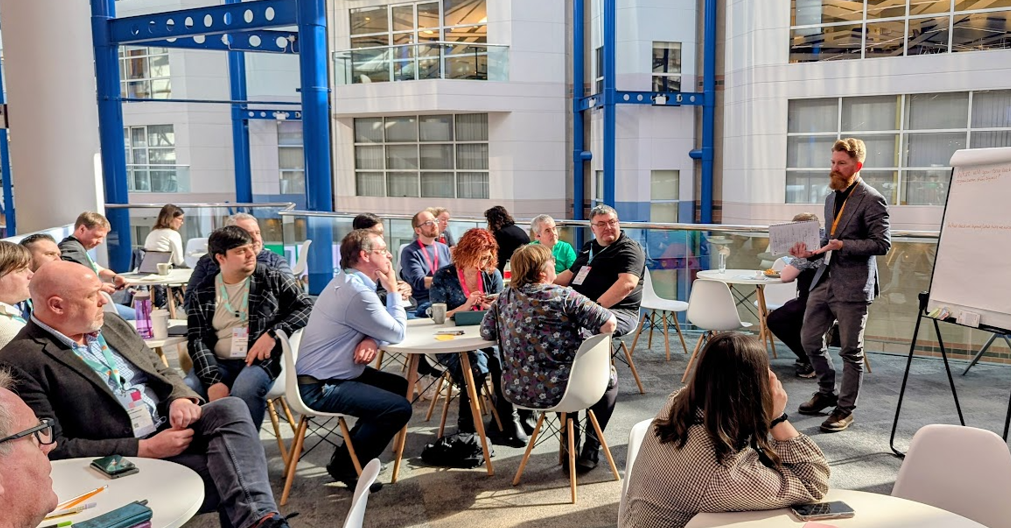
Digifest also provided an opportunity to catch up with colleagues from across Wales during the Cymru Connected meet-up, hosted by Rhys Daniels.
With the Senedd elections approaching, participants shared a range of thoughts about what they would like to see next from the Welsh Government in relation to digital and post-16 education.
Discussions around the tables touched on several familiar themes for the sector, including digital inclusion, infrastructure, staff capability and what’s needed to support sustainable and meaningful digital change.
It was a valuable opportunity to connect with colleagues and hear perspectives from across the Welsh tertiary education sector, particularly as we are currently conducting a review of the Digital 2030 strategic framework for Wales.
Capturing the conversation
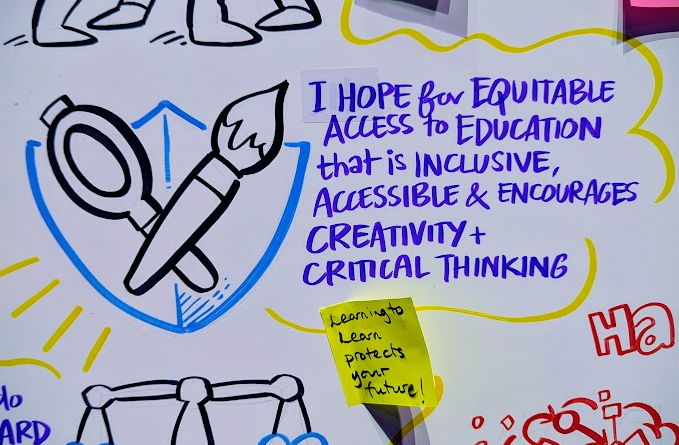
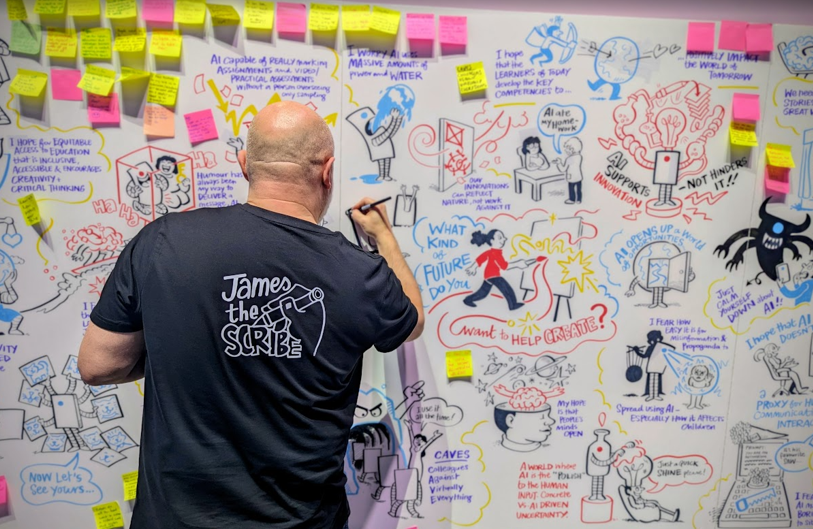
One of the most striking parts of the event was the work of James the Scribe, who was visually capturing the conversations taking place across Digifest.
As the conference progressed, his illustrations began to build a picture of the hopes, challenges and opportunities people see for the future of education and research.
Watching these ideas take shape visually was a fascinating way of reflecting on the collective discussions happening throughout the event.
Looking ahead
Digifest always provides a useful opportunity to step outside the day-to-day work and reflect on the bigger picture.
Whether through structured sessions, community conversations or keynotes in Hall 1, the event continues to bring together people who are thinking seriously about the future of education, technology and leadership.
I’m looking forward to seeing where those conversations lead next.
