
Last week I attended Demonstrating digital transformation – Future Ready: empowering people to drive impactful digital change, a collaborative event hosted by the University of Southampton and Jisc.
A question worth asking
The theme of the day was that successful digital transformation depends as much on people, capability and culture as it does on technology. This echoes the themes of Jisc’s framework and maturity model for digital transformation. Through presentations and collaborative workshops, colleagues explored how digital change can create better experiences for students and staff.
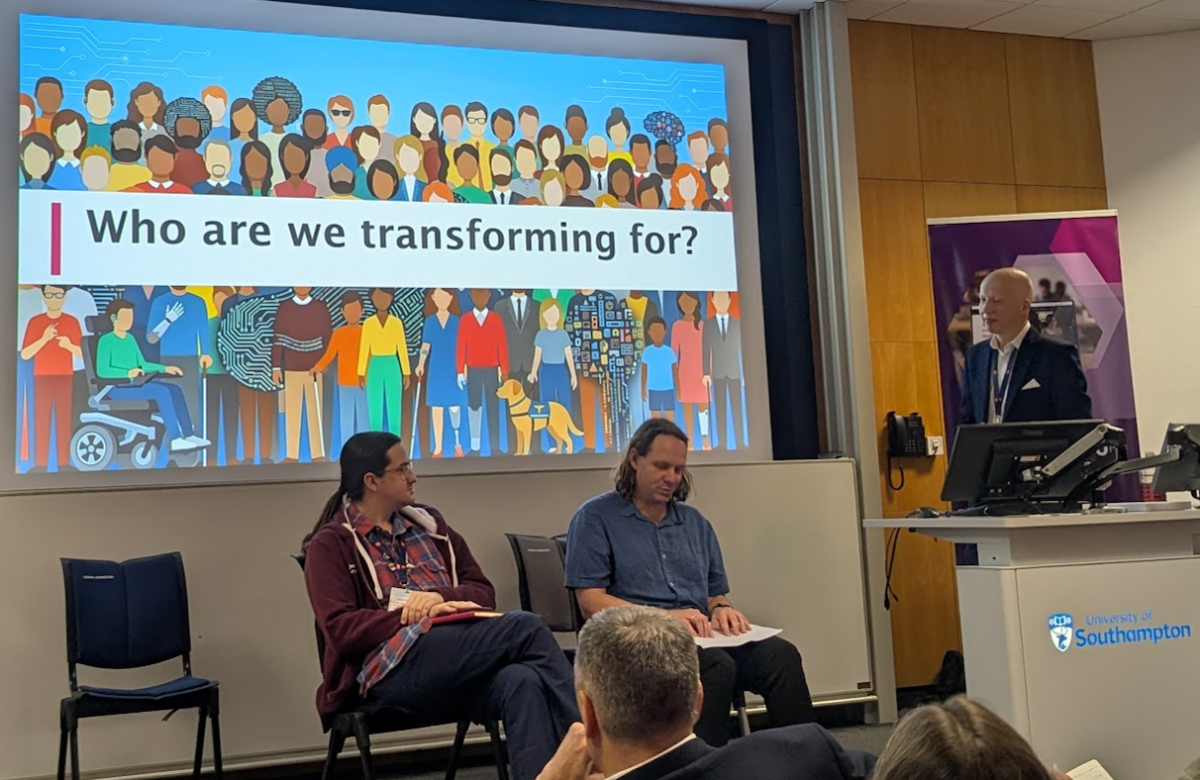
One contribution in particular stayed with me. During an afternoon session on accessibility, Dr Ben Whitburn shared a slide posing a simple but powerful question: who are we transforming for? Again and again, speakers returned to the importance of understanding people, their needs and their experiences
A communication clarity gap
One of the provocations from the day came from Cato Rolea, who suggested that universities may not have an AI skills gap as much as a communication clarity gap.
He argued that the skills needed to work effectively with AI are nothing new. Giving clear instructions, providing context, evaluating evidence and applying professional judgement are capabilities that universities already help people develop. AI is not simply introducing new challenges; it is also shining a light on existing ones.
That focus on people rather than technology surfaced elsewhere throughout the day. In a breakout session, hosted by Cato and his colleague Will Baker, participants were encouraged to consider how students are currently using AI, the concerns they may have and how institutions can respond. Rather than beginning with the technology itself, the conversation started with student experiences and perspectives.
From projects to products
In a session on the University of Southampton’s student app, we heard how it was developed using an agile, student-led approach. The app was designed to simplify how students navigate multiple digital systems and services. What interested me most was the shift from a project mindset to a product mindset. Instead of delivering a finished solution and moving on, the focus was on continuous improvement informed by feedback and real-world use. As we advocate for these approaches in our Jisc’s Digital Leaders Programme, it was rewarding to see these ideas being applied directly to improve the student experience.
Accessibility in practice
The accessibility session provided perhaps the clearest example of people-centred digital transformation. Matthew Deeprose, Dr Ben Whitburn and Joshie Christian combined technical, academic and student perspectives to explore what accessibility looks like in practice. Dr Whitburn brought both professional expertise and lived experience to the discussion. At one point he remarked that his disability “precedes” him. It was a powerful observation that highlighted how differently people can experience the same digital environment and served as a reminder that accessibility is not an abstract concept. For many people, it shapes their experience of education, work and everyday life.
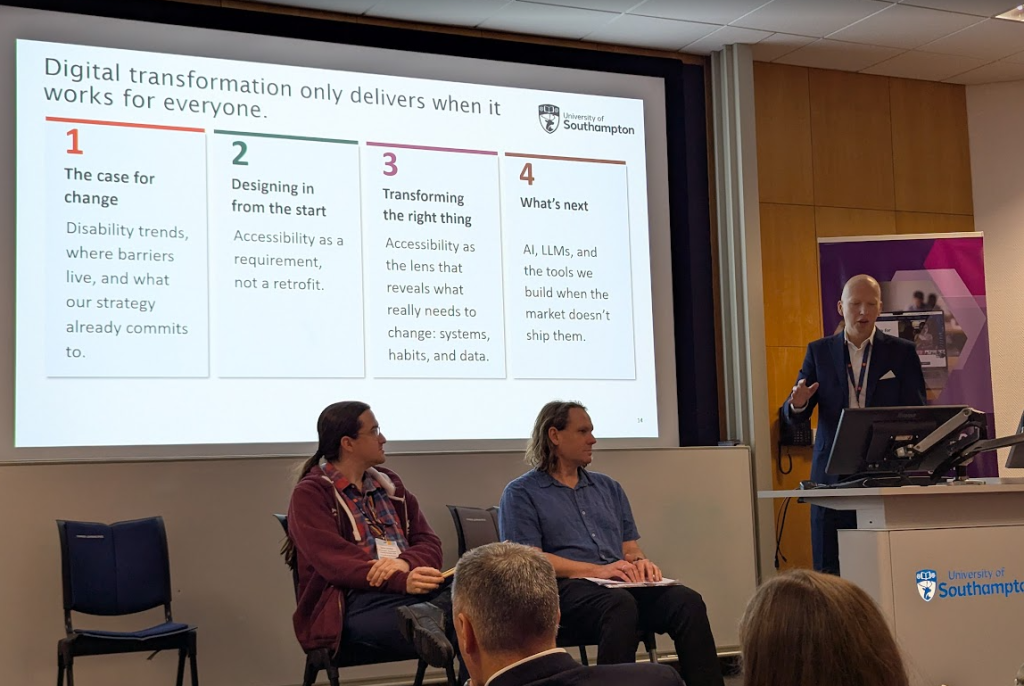
Another point raised during the session was that many documents remain inaccessible to screen readers because of the way they are authored and structured. One example that illustrated this well was of an assessment form that couldn’t be read because it included a table within a table! The speakers noted that AI systems access information in much the same way as screen readers, creating an interesting link between accessibility and emerging technologies. Making content more accessible for people using assistive technologies may also improve how effectively organisations can use AI tools. Seen in this light, accessibility becomes about more than compliance. It is part of creating digital environments that are usable, understandable and effective for everyone.
The conference concluded with reflections from senior leaders at the University of Southampton, linking institutional strategy with the realities of delivering services on the ground. Their message reinforced many of the themes from earlier sessions. Digital change is not simply about introducing new technologies. It requires leadership, collaboration, service ownership and a clear understanding of the people the organisation exists to support.
Perhaps the best summary of the day came from the accessibility session: “Digital transformation only delivers when it works for everyone.”
